High Fever In Babies
Video Fever in Kids: When to Call the Doctor
CHANNEL YOUTUBE : The Children's Hospital of Philadelphia
High Fever In Babies. A fever this high in an infant less than 3 months old. A fever in a baby is 100.4 degrees f.
Do you Know What Babies Are All About
Babies are considered to be the smallest member of the human race. Although the term "baby” is commonly used to refer to human offspring, infant can also be used to refer to infants from other species. In general, infants are younger then one month of age. There are, however, some exceptions to this norm. Any infant less than one month aged is thought to be a newborn.
Baby's first time to test
Baby's First Test is an online platform that connects parents and health professionals throughout the newborn screening process. It includes educational resources from across the U.S. and answers frequently asked questions. It also offers parents' stories as well as guides to assist families through the process. A simple search for "baby's very first exam" will bring up many related resources. The test will test your baby's auditory cortex as it's part of the neural pathway that transmits sound signals from through the ears and into the brain. It involves inserting a small probe into the ear of your baby then playing the sound while observing the body's response to the sounds. The test is painless and your baby won't feel any sensation. Following the initial screening, the child's specimen will be kept in a locked, secure storage space for at least 2 years. This allows the test results to be checked and improved on. It also allows laboratory personnel to conduct tests of quality and research. After two years, samples would be destroyed.
Apgar score
The Apgar score for babies provides a quick overview of a newborn's health. It can be administered just minutes after birth or even as a the event of the need for resuscitation. This is an extremely useful device for parents and healthcare doctors as well. But, it shouldn't be used as a substitute in medical care. Apgar scores are calculated based on the combination of various factors. A lower Apgar score signifies that a baby could be at an increased risk for medical intervention however, it's not necessarily an indication of a serious medical problem. Actually, a lot of babies have an extremely low Apgar score, yet they're extremely healthy. Your doctor can explain the reason you should be concerned, but keep in mind that this score isn't the only indicator of health, behavior, or personality.
Sleep patterns
Sleep patterns for babies vary during the nights. The individual baby's requirements and needs. For instance, some babies have shorter naps during the night as compared to others, while others may sleep for between four and 5 hours a day. While adults are able to sleep for several hours without getting up in the night, babies are more likely frequently throughout the night. It's important to consider that genes can affect the way a baby sleeps and temperament. Some babies have more difficulty falling asleep and are more likely to get more angry. Some babies are more open to changing their sleep patterns than others. Genetics can also affect particular aspects of the sleep cycle like the length of time they stay asleep at night. Beyond genetic factors, environmental influences can also impact a baby's sleeping habits. Two studies of babies as young as 6 months observed that genetics could be responsible for about half the variation regarding the duration of nighttime sleep, while environmental factors were responsible for the remainder. The length of a sleeping cycle can be as short being as 45 minute. The first night of sleep is known for its frequent wake-ups and the occasional light sleep.
Sensors
Babies utilize their senses to learn, bond with their family members and explore the world. This is according to Lise Eliot, Ph.D. of the book of What's Happening in There: How the Brain and Mind Grow in the First Five Years of Life, your child's s senses develop in the womb. The senses are strengthened and more advanced as your child develops. The vestibular system senses changes in the ear's inner receptors. The proprioception sense helps your baby be aware of its body's position and can be enhanced through the stimulation of movement. These activities help improve the baby's sensory abilities and increase his or her coordination and balance as well as concentration.
Infections
The earliest life events can affect a person's physiology and make them more susceptible to illness. One of the most important components of these "programmed effects" is early nutrition. The research field of developmental causes of disorders and illnesses (DOHAD) addresses this issue. In addition to the traditional genetic causes of disease there are other factors that can affect a child's growth. The beginning of medical history was when diarrhoea along with tuberculosis are major deaths in children. Victorians were unaware that bovine TB was an epidemic of social concern that killed millions of people, especially children. This airborne disease thrives in homes with a high population density and is often transmitted by milk. Before 1930, milk related illness was responsible for about 30 per cent of tuberculosis related deaths among infants.
Nutrition
Another of the important steps to feed your child is to offer many healthy choices of food. Fresh fruits and vegetables are an excellent source of nutrients that help increase growth. A baby's meals should include foods that are rich in nutrients like whole grains. When you are eating, be certain to select items that are low in sodium. It is essential to provide the right nutrition to your baby throughout this crucial stage. Baby's early years are packed with the rapid development and expansion, and a healthy diet is crucial to ensure proper growth and organ development. In addition to providing the right foods for your baby, you should also use positive methods for feeding your child to establish an unquestionably positive attitude towards food and encourage healthy eating habits. It is essential to ensure that your baby receives enough of nutrients that promote growth and brain development such as vitamin A, D, and B6, along with the fiber and protein. In addition, babies require zinc, iron folate, iron, and other prebiotics.
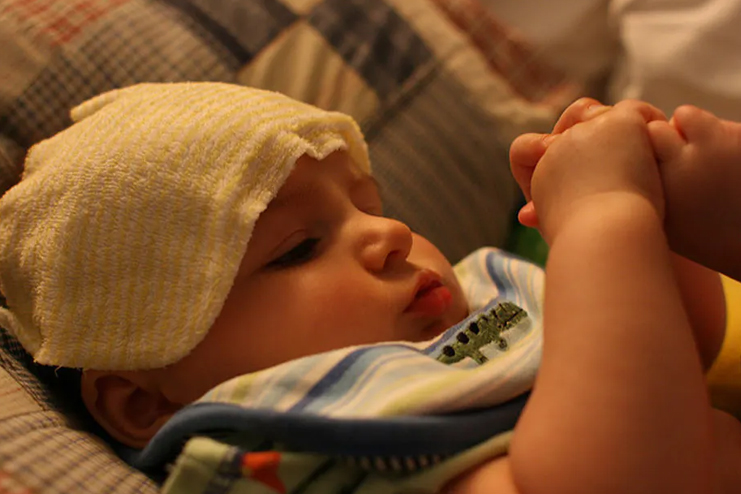
There can be various reasons, which can give rise to high fever in kids. Fever in a newborn the system that controls body temperature is not well developed in a newborn. When kids have a fever, they often are fussy, not eating and visibly uncomfortable.
Rectal (Bottom), Ear Or Forehead Temperature:
You can check their temperature with a thermometer. Your child is 3 months old or younger and has a fever of 100.4°f (38°c) or higher. An overheated baby may have a hot, red, or flushed face, and may be restless.
Your Child Has A True Fever If:
A fever this high in an infant less than 3 months old. Knowing the underlying cause of the fever is a must, in order to avoid severe consequences. A fever in a baby is 100.4 degrees f.
Any Reading Above 38°C Is Considered A Fever.
What is considered a high fever? Fever in a newborn the system that controls body temperature is not well developed in a newborn. 1 if your baby has a fever of 100.4 f (38 c) or.
Is 3 To 12 Months Old And Has A Fever Of 102.2°F (39°C) Or Higher.
Typically, your baby’s normal body temperature should stay between 36.5°c and 37.5°c. Fever in young children usually means that they have an underlying infection. Call your baby's healthcare provider immediately if your baby is younger than 3.
A Newborn Baby Temperature Is A Bit Higher, Averaging 99.5 Degrees For The First 28 Days.
Ways you can manage your baby’s fever include: Fever is the only symptom. 4 rows any fever in babies under 3 months of age, or a fever over 104 f (40 c) in older kids.
Post a Comment for "High Fever In Babies"